Biomaterials
To date, biocompatible and bioinstructive materials are essential for many applications in Health Technologies either as coatings, bioinks for 3D Bioprinting and also as biodegradable materials for implants. KITHealthTech is resembling many scientists from the KIT working on accelerated biomaterial synthesis and processing.
Biomaterials Engineering Platform
The KIT is supporting currently four Materials Engineering Platforms that are all of a high strategic relevance for the field of Health Technologies.
- ChemASAP
- Platform for hierarchically structured materials
- BioMAT Foundry
- Soft Matter Lab
In addition the KIT has a strong expertise on various topics within the field of materials systems engineering which are also enormously important for Health Technologies. These Topics comprise biomaterials and bioinstructive materials for producing gadgets, especially for soft bioelectronic devices, implants and biochemical sensors. In addition quantum materials for quantum sensors and sophisticated energy materials for the energy support in wearables, biolelectronics and sensors and soft materials for robotics. Most of the devices require sophisticated batteries that connect to sensors and allow for computing power.
Hierarchically structured biocarrier materials
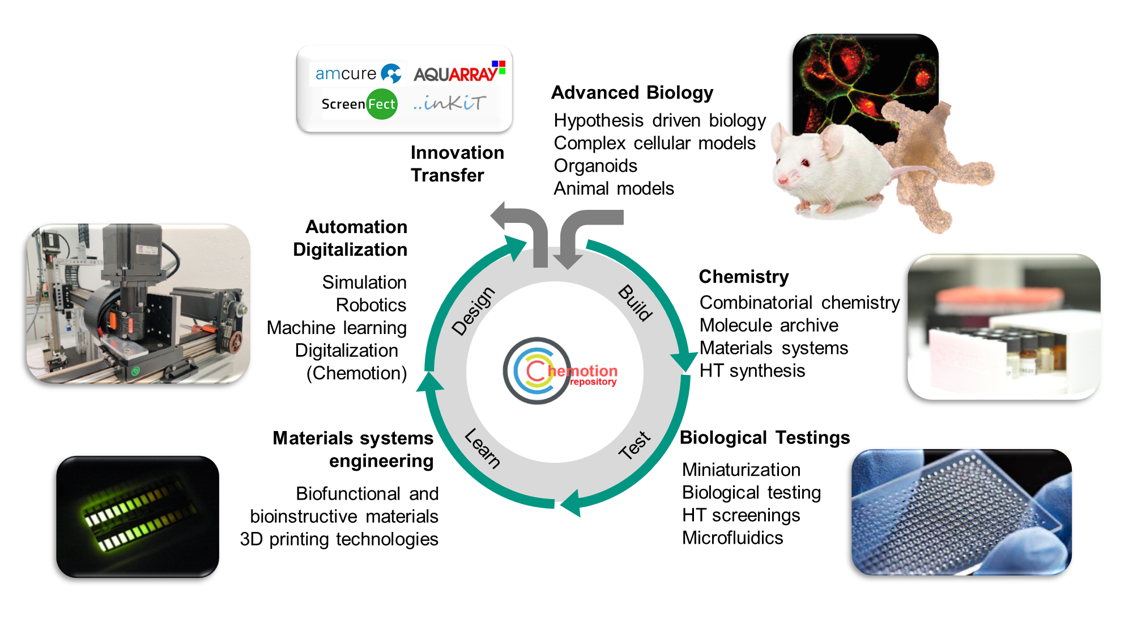
Emerging applications in the fields of bioanalysis and biomedicine result in multiple and often partly conflicting demands regarding particulate carriers for e.g. target specific ligands, drugs, dyes, etc. In the Franzreb group new types of hierarchically structured, hybrid biomaterials are developed and tested, which offer application specific multifunctionalities such as e.g. a combination of magnetic, fluorescent and biospecific properties. The hierarchical structure allows automated, combinatorial synthesis and rational design by modelling and AI approaches.
The developed particulate biomaterials are an indispensable prerequisite of other research activities of the group, such as the development of new impedimetric biosensors for intelligent wearables or smart and scalable separation methods for biotechnological key molecules.
BioMAT Foundry
Besides the metals polymers are the preferred class of materials when it comes to biomedical and health technology applications ranging from orthopedic implants to drug eluting and drug delivery devices due to their customizable properties by attaching tissue targeting ligand or bioinstructive functionalizations.
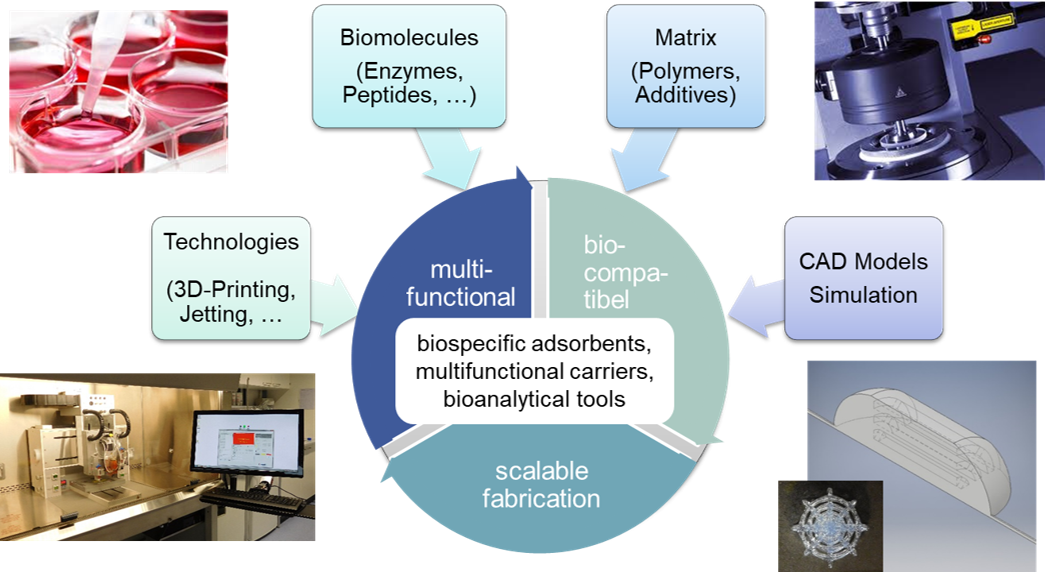
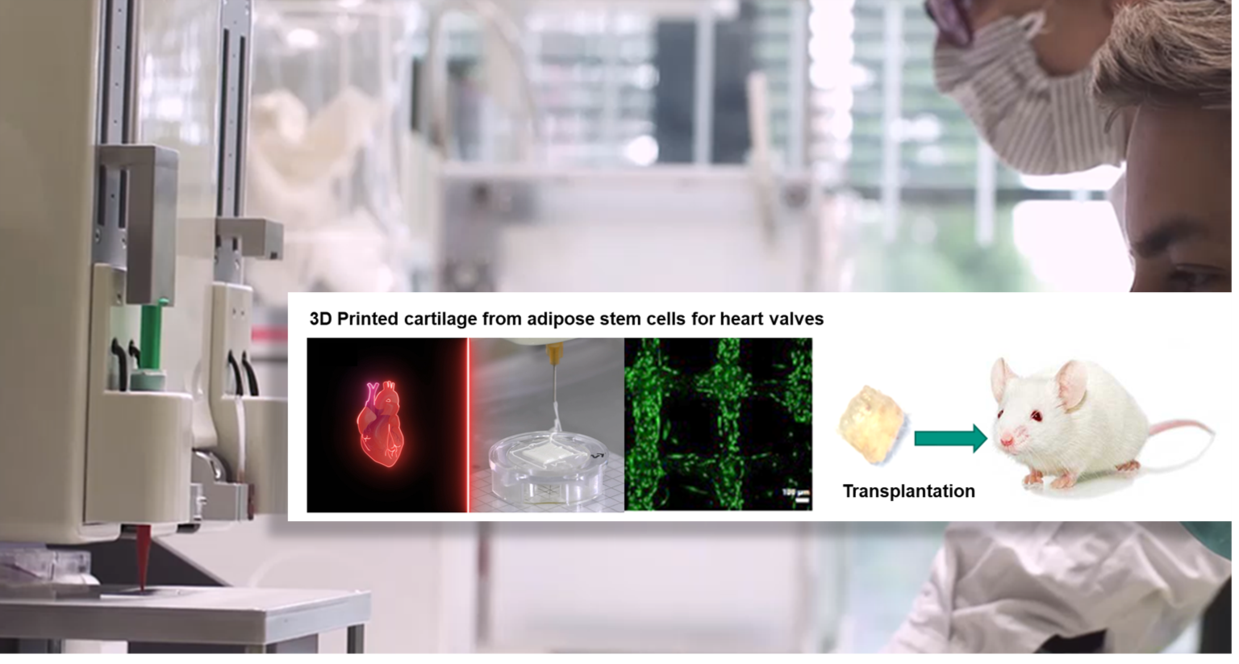
The BioMAT-Foundary at KIT for Bioprinting Materials will serve to transfer technology from the extensive research on 3D bioprinting automation, bioprinting materials, and hybrid biomaterials including the SOP generation to industrial applications in the fields of pharmaceuticals, regenerative medicine, and biotechnology. With its interdisciplinary approach, which involves close cooperation between chemical and bioengineers with chemists, biologists, automation engineers and computer scientists, the project pursues a holistic approach that places industrial requirements with regard to certification and availability of starting materials, standardization of processes and detailed documentation and quality control in the focus of developments from the very beginning.
Soft Materials for Precise and Long-term Health Monitor
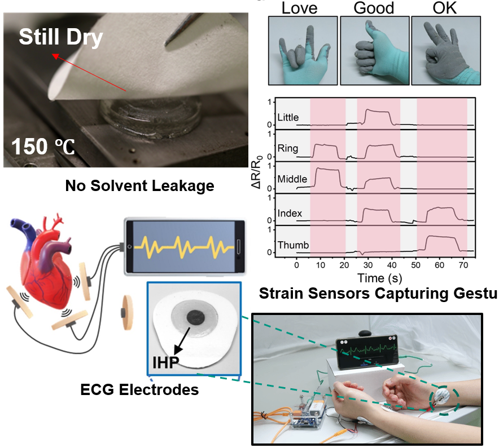
Wearables allow continuous 24/7 observation of a patient's health, whether at home or on the road. The data captured by wearable sensors can provide tremendous value to healthcare services and can provide insights into an individual's health. Soft conductive materials, combining tissue-like mechanical properties with outstanding electrical performance, can provide more precise detection than conventional devices. The long-term health monitoring requires high stability of soft materials under harsh environments involving unpredicted changes in stress, humidity, and temperature. At KIT we are developing soft functional materials using oligomers as a solvent to achieve precise signal capture and maintain long-term performance.
Projects
BioMAT Foundry (Schepers/IFG-CB, Hubbuch/ EBI, IFG, Franzreb/ IFG, Bräse / IBCS-FMS, IOC)
Hierarchically structured biocarrier materials (Franzreb, Wöll/ IFG)
Materials for cell preservation (Gaukel/LVT)
Printing of polymers, metals, ceramics and composites (Hanemann/ IAM, Greiner/ IAM)
Soft materials for bioelectronics (Aghassi, INT/ Breitung/ INT, Hirtz, INT/ Schepers/ IFG)
Soft materials synthesis facility (Soft Matter Lab Bräse/IBCS-FMS, Théato/ IBG-III, Lahann/ IFG)
Developing soft materials with novel properties (Levkin/IBCS-FMS, IOC)
Modelling polymer processes and structures (Kärger/ FAST)
ChemASAP Materials synthesis platform (Jung, Bräse IBCS-FMS, IOC)
Inorganic nanocrystals for biomedical imaging and cancer treatment (Hudry, Richards/ IMT)